









Summer schools
On-Site
CLOSED (open from 01 January 2027)
The increasing importance of Life Sciences for the creation of value-added compounds in many economic sectors contributed to the rise of the now popular term “Bioeconomy”, referring to “the set of economic activities relating to the invention, development, production and use of biological products and processes” (OECD, 2009). These activities are characterized by the focus on the reduction of environmental pollution and on the adoption of sustainable practices. Since new scientific advancements in Biology and Biotechnology can be applied to an increasing number of fields, the Bioeconomy revolution is expected to provide solutions and benefits for a wide variety of human necessities, such as health care (e.g., biopharmaceuticals), agriculture (e.g., bio-pesticides), industrial processes (e.g., bio-refineries and biopolymers) and environmental sustainability (e.g., bioremediation), in both developing and developed countries.
The aim of the Bioeconomy School is to offer to PhD students, young scholars and researchers from different disciplines an overview of the main scientific topics and of the related advanced competences that are necessary to understand and govern the Bioeconomy transformation. The program offers a set of multi-disciplinary lectures, organized in sub-modules, ranging from the introduction to the basic scientific toolbox used in Biosciences and Economics, to the discussion of more specific case studies related to ongoing research and innovation projects.
Mastering these aspects is expected to be relevant for entrepreneurs, public institutions and researchers working on these topics. Besides the classes, the instructors will provide mentoring sessions to the participants, with feedback on their research interests and ongoing works.
The school will be held at Villa del Grumello, Como (Italy), during the week of June 7-11, 2027.
This will be the 4th edition of the Bioeconomy Summer School, after the 1st edition - BSNE Bioeconomy School: from Basic Science to a New Economy (held online on May 24-28, 2021), the 2nd edition - BTSE The Bioeconomy Transformation: Science, Economics, Business and Society (held in person at Villa del Grumello, Como (Italy), on June 5-9, 2023) and the 3rd edition - Bioeconomy School - Science, Economics, Business and Society (held in person at Villa del Grumello, Como (Italy), on April 14-18, 2025).
This Bioeconomy School will host contributions from the Sust-STAM INTERREG Project. It will also benefit from the financial support of the MUR (Italian Ministry of University and Research) Grant Progetto Dipartimenti di Eccellenza 2023–2027, CUP J37G22000330001, DiEco (University of Insubria), the INSUBRIA INTERNATIONAL SUMMER SCHOOL – IISS, and the International Union of Biochemistry and Molecular Biology (IUBMB).
Organizing committee:
Francesco Molinari - Full Professor of Fermentation Chemistry and Biotechnology, University of Milan
email: francesco.molinari@unimi.it; web: https://www.unimi.it/en/ugov/person/francesco-molinari
Loredano Pollegioni - Full Professor of Biochemistry, University of Insubria & IUBMB
email: loredano.pollegioni@uninsubria.it; web: https://www.uninsubria.it/hpp/loredano.pollegioni
Raffaello Seri - Full Professor of Econometrics, University of Insubria
email: raffaello.seri@uninsubria.it; web: https://www.uninsubria.it/hpp/raffaello.seri, http://rseri.me
Daniela Ubiali - Associate Professor of Fermentation Chemistry and Biotechnology, University of Pavia
email: daniela.ubiali@unipv.it; web: https://unipv.unifind.cineca.it/get/person/013689
Andrea Vezzulli - Full Professor of Applied Economics, University of Insubria
email: andrea.vezzulli@uninsubria.it; web: https://www.uninsubria.it/hpp/andrea.vezzulli
Provisional list of Speakers (to be confirmed):
Fabrizio Adani (University of Milan)
Andrés R. Alcántara (Complutense University of Madrid)
Richard Bailey (School of Geography and the Environment, University of Oxford)
Mark Brewer (University of St Andrews Business School)
Catia Miriam Costa (ISCTE - University Institute of Lisbon)
Salvatore Fusco (University of Verona)
Sandro Mendonça (European Patent Office & ISCTE - University Institute of Lisbon)
Francesco Molinari (University of Milan)
Marina S. Robescu (University of Pavia)
Loredano Pollegioni (University of Insubria)
Barbara Pozzo (University of Insubria)
Andreas Pyka (University of Hohenheim)
Elena Rosini (University of Insubria)
Michael P. Schlaile (University of Hohenheim)
Giovanni Sannia (Italian Cluster of Bioeconomy – SPRING)
Raffaello Seri (University of Insubria)
Stefania Trenti (Intesa Sanpaolo)
Daniela Ubiali (University of Pavia)
Andrea Vezzulli (University of Insubria)
Roland Wohlgemuth (European Society of Applied Biocatalysis & Lodz University of Technology)
PROVISIONAL PROGRAMME (to be confirmed):
Day 1 – June, 7th
(afternoon)
“The Bioeconomy School Opening Lectio Magistralis”
Parallel sessions:
Module A: Introduction to Biosciences
- Biodiversity: from origin of life to circular bioeconomy
- New generation of biocatalysts for circular bioeconomy
- Biocatalysis intensification: sustainable processes for the bioeconomy
- Biomass as a renewable feedstock: definition, classification, and conversion in new products
Module B: Introduction to Economics
- Externalities: problems and solutions
- The transition from linear to circular economy and bioeconomy
- Capital budgeting
- Bioeconomy and Innovation
(evening)
Social event: Welcome drink in Villa del Grumello
Day 2 – June, 8th
(morning)
Module C: New trends in Biotechnology
- Enzymes for the sustainable production of value-added chemicals
- Systems biocatalysis
- Biotechnology as a driver for sustainable innovation
- Biomanufacturing and sustainable bioeconomy: a scientific overview
(afternoon)
Module D: Sustainability assessment tools
- Green chemistry assessment: show me the metrics!
- Life Cycle Assessment: Theory and Practice
- LCA- and LCC-driven biosolutions
- LCC & Cost-Benefit Analysis
(evening)
Social event: Guided visit to Como and dinner
Day 3 – June, 9th
(morning)
Module E: Law, Society and Global Governance
- EU legal framework
- Legally green, but not sustainable: An Anglo-American analysis of law’s complicity in the unsustainable fashion industry
- Designing a circular carbon and plastics economy
- The EU Bioeconomy: present trends and future
(afternoon)
Case Studies
Practical session: Bioeconomy Serious Play https://doi.org/10.1016/j.nbt.2026.03.002
(evening)
Social event: Guided visit to Brunate or Baradello with aperitivo and free time
Day 4 – June, 10th
(morning)
Module F: Initiatives and Policies
- Why transformation and not growth or development should be on our agenda
- Complexity and uncertainty in innovation policy and bioeconomy strategies
- G20, BRICS and the Bioeconomy: Differences and similarities in the international discourse
- Bioeconomy and Big Tech
(afternoon)
Case Studies
Students’ mentorship for projects’ preparation
(evening)
Social event: Social dinner
Day 5 – June, 11th
(morning)
“The Bioeconomy School Closing Lectio Magistralis”
Students’ challenge: presentation of bioeconomy innovative projects with final assessment and awards.
Farewell
During the Summer School, a mentor will be assigned to each student, who will provide support and feedback on selected research topics.
Mentoring activities will be structured to encourage international collaboration, with the goal of fostering future joint research projects and academic partnerships across institutions and countries.
SHORT PRESENTATIONS: participants will have the option to give a short presentation (up to 5 minutes) of their research interest on Monday, June 7 afternoon.
Applications
The school is open to a limited number of maximum 40 participants
Applications will open in January 2027 on the website of the Lake Como School of Advanced Studies.
https://lakecomoschool.org/
Selected applicants will be notified in March 2027.
Registrations will close in April 2027
Registration fees (VAT included):
250 € for students and young researchers from academia and public research institutions.
500 € for industry representatives and professionals from other institutions.
Registration fees include: all lectures and course material; wi-fi connection; lunches and coffee breaks; social events. The fees do NOT cover accommodation and travel costs.
* A limited number of scholarships covering application fees and/or accommodation (in a shared room in the nearby foresteria) will be granted.
Contacts
For expressing the interest in participating or for any other enquiries about the scientific aspects of the School, please contact the members of the Organizing committee:
Francesco Molinari - email: francesco.molinari@unimi.it;
Loredano Pollegioni - email: loredano.pollegioni@uninsubria.it
Raffaello Seri - email: raffaello.seri@uninsubria.it
Daniela Ubiali - email: daniela.ubiali@unipv.it
Andrea Vezzulli - email: andrea.vezzulli@uninsubria.it

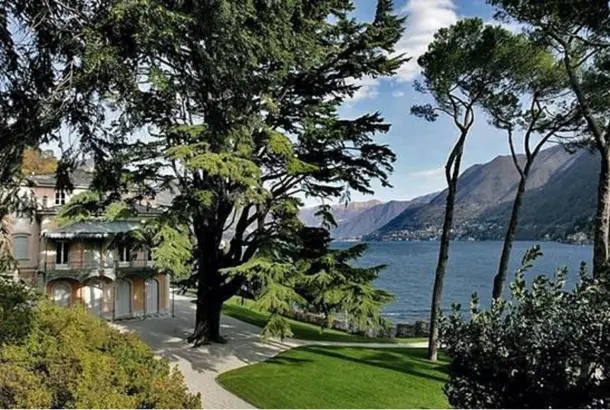
Villa del Grumello, Como (Italy)
Como , Italie

